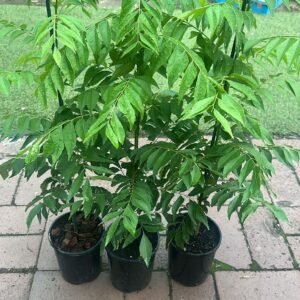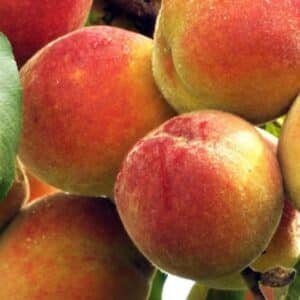
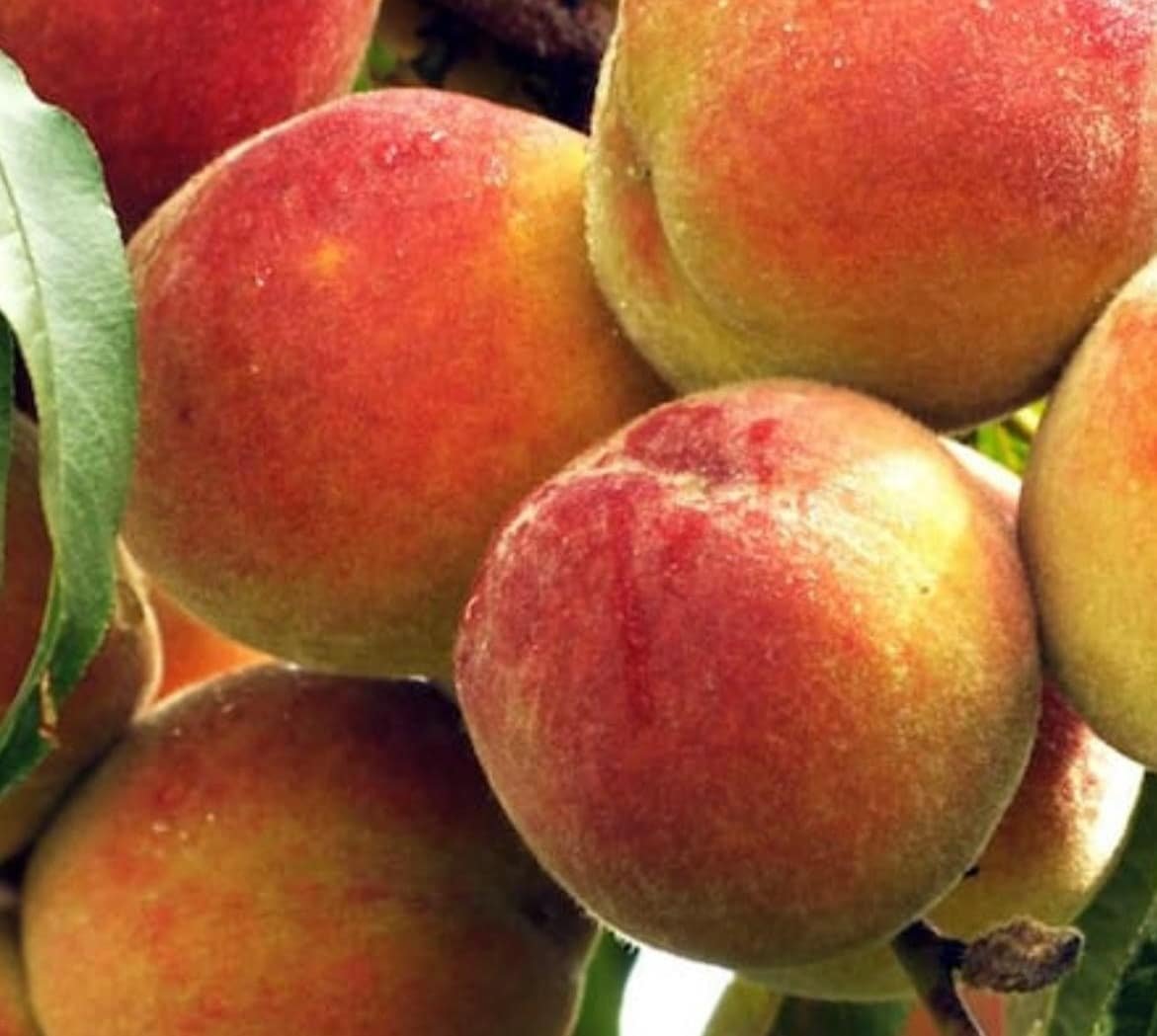
The ‘J.H. Hale’ is an iconic heirloom peach variety, often referred to as the “Million Dollar Peach” due to its exceptional size and premium quality. Discovered in the early 20th century, it remains a favourite for home orchardists who prioritise flavour and fruit size. The fruit is exceptionally large, round, and uniform, with a beautiful golden-yellow skin covered in a deep red blush.
The flesh is bright yellow, firm, and almost entirely free of fibre, offering a rich, melting texture and a perfect balance of sweetness and acidity. As a freestone variety, the pit is easily removed, making it a top choice for canning, preserving, and fresh slicing. Unlike most peach trees, the ‘J.H. Hale’ is not self-fertile; it requires another peach variety nearby to act as a pollinator to ensure a good crop.
Care Tips
-
Position: Requires full sun (at least 6–8 hours daily) for fruit development and to help prevent fungal diseases.
-
Climate: Best suited to Cool Temperate and Temperate climates. It has a high winter chill requirement to break dormancy and fruit properly.
-
Pollination: Essential. This variety is pollen-sterile. You must plant it near another peach variety that blossoms at the same time (such as ‘Elberta’ or ‘Anzac’) to achieve fruit set.
-
Soil: Prefers deep, well-drained, sandy loam enriched with organic matter. Peach trees are highly sensitive to waterlogged soil.
-
Watering: Provide deep, regular watering during the growing season, particularly from flowering through to harvest. Avoid overhead watering to reduce the risk of leaf diseases.
-
Fertilising: Apply a balanced fruit tree fertiliser in early spring and again in mid-summer.
-
Pruning: Prune in winter to a “vase” shape to allow light and air into the centre of the tree. This variety is a vigorous grower and benefits from fruit thinning in spring to prevent branches from breaking under the weight of the massive fruit.
-
Pest and Disease: Highly susceptible to Peach Leaf Curl. Apply a copper-based fungicide spray at “bud swell” (just before the buds open) in late winter.