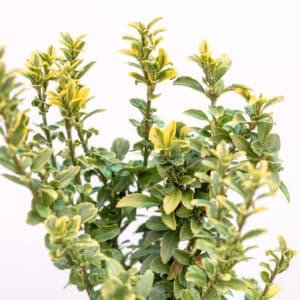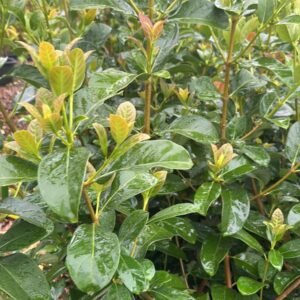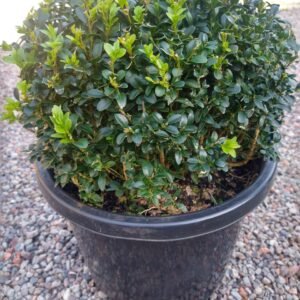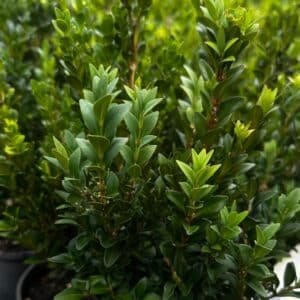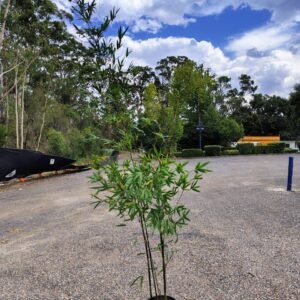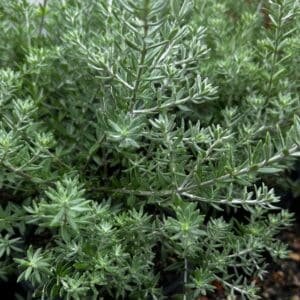
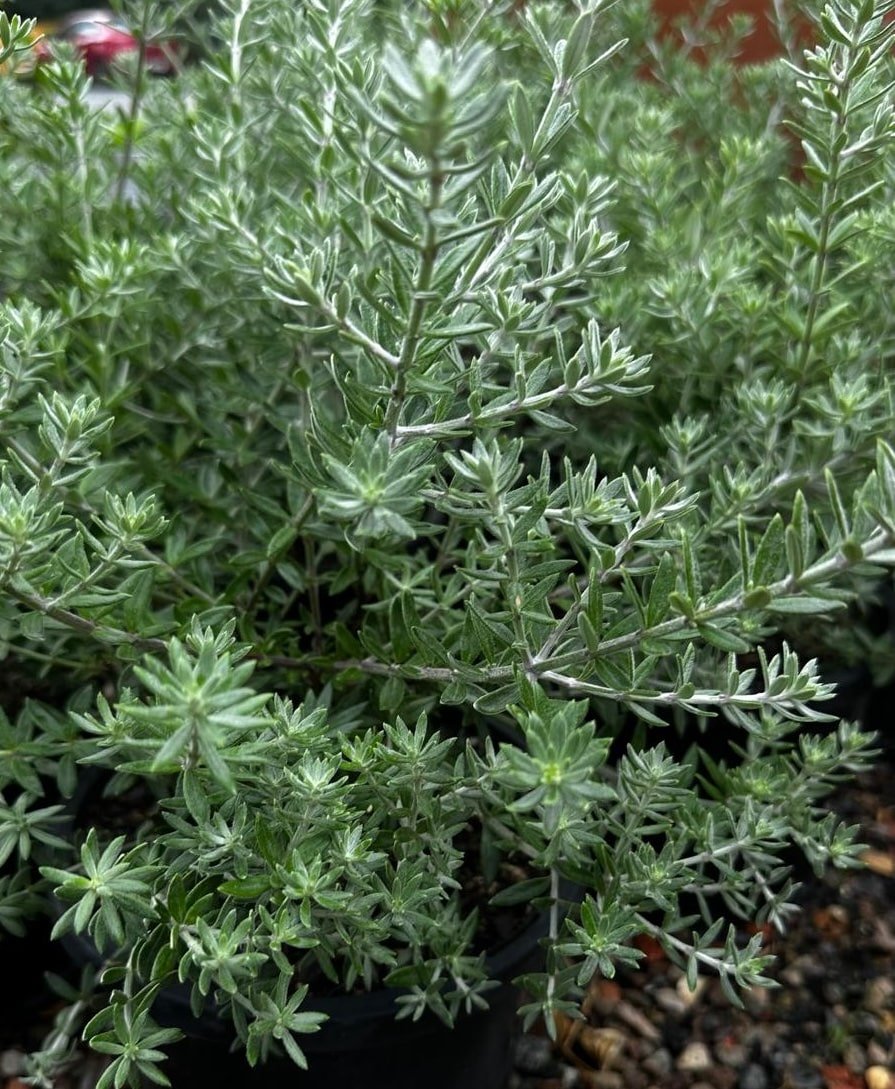
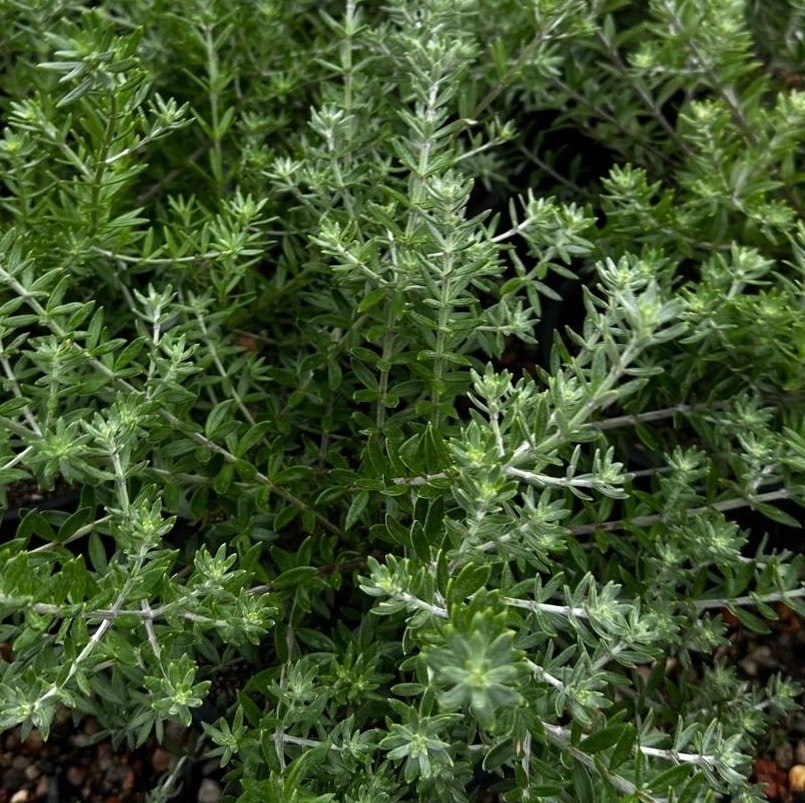
Westringia brevifolia, commonly known as the Short-leaved Westringia, is a versatile evergreen shrub native to the coastal regions of South Eastern Australia. It is a member of the mint family and is highly valued for its dense, mounded growth habit. The foliage consists of tiny, stiff leaves that are arranged in whorls around the stems, giving the plant a fine, textural appearance.
This species is particularly well-suited to the Australian climate due to its incredible resilience. It is often used as a more rugged alternative to Box hedging. Throughout most of the year, but most prolifically in spring and summer, it produces small, tubular flowers that attract native bees and butterflies. Its ability to tolerate salt-laden winds and poor soils makes it a staple for coastal landscapes and modern native gardens.
Care Tips
-
Position: Thrives in full sun but will tolerate part shade. For the densest growth and best flowering, a sunny spot is highly recommended.
-
Climate: Extremely hardy. It is frost-tolerant and exceptionally well-adapted to coastal conditions, handling salt spray and wind with ease.
-
Soil: Requires well-drained soil. While it is adaptable to many soil types, including sandy loams, it will not tolerate sitting in waterlogged ground.
-
Watering: Low water requirements once established. It is very drought-tolerant, making it an excellent choice for water-wise gardens. Water regularly during the first few months to help the root system settle.
-
Fertilising: Use a low-phosphorus fertiliser specifically formulated for Australian native plants in early spring.
-
Pruning: Responds very well to pruning. It can be clipped into tight formal shapes, spheres, or maintained as a neat hedge. Regular light pruning will encourage a thicker, more compact habit.
-
Pests: Generally pest and disease-free, though good airflow is important to prevent any fungal issues in humid conditions.