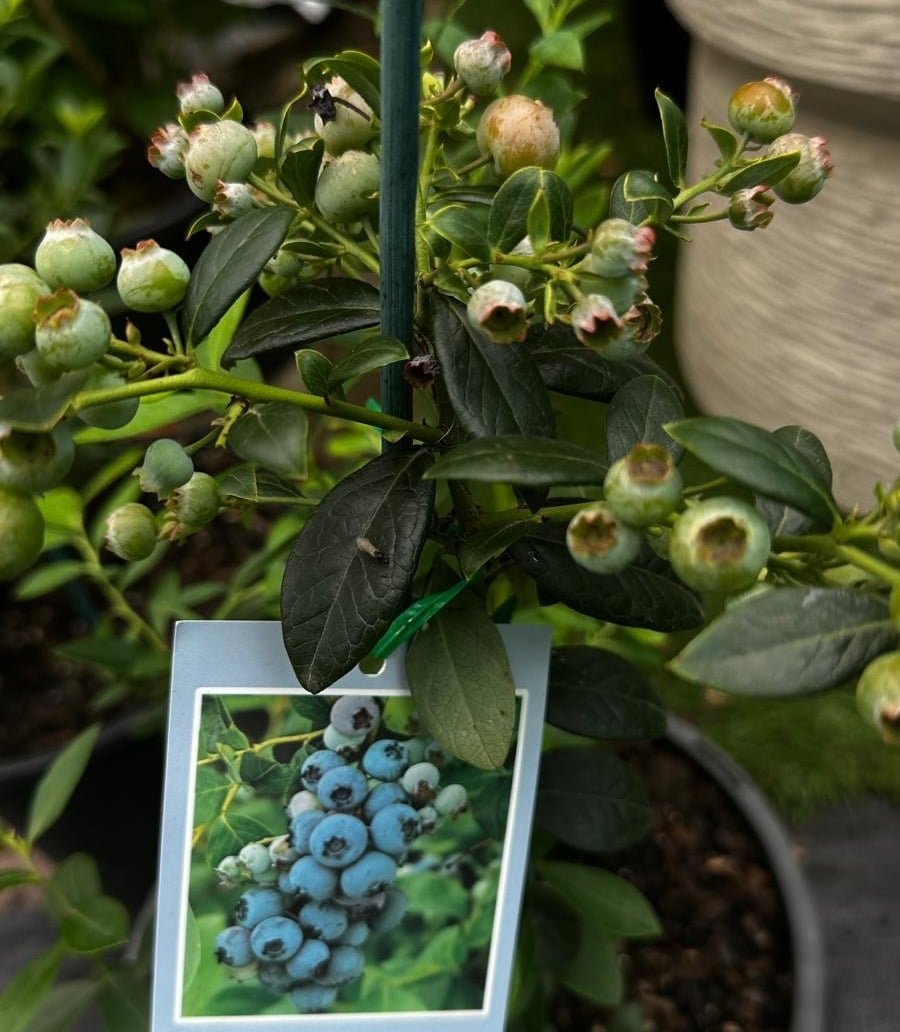
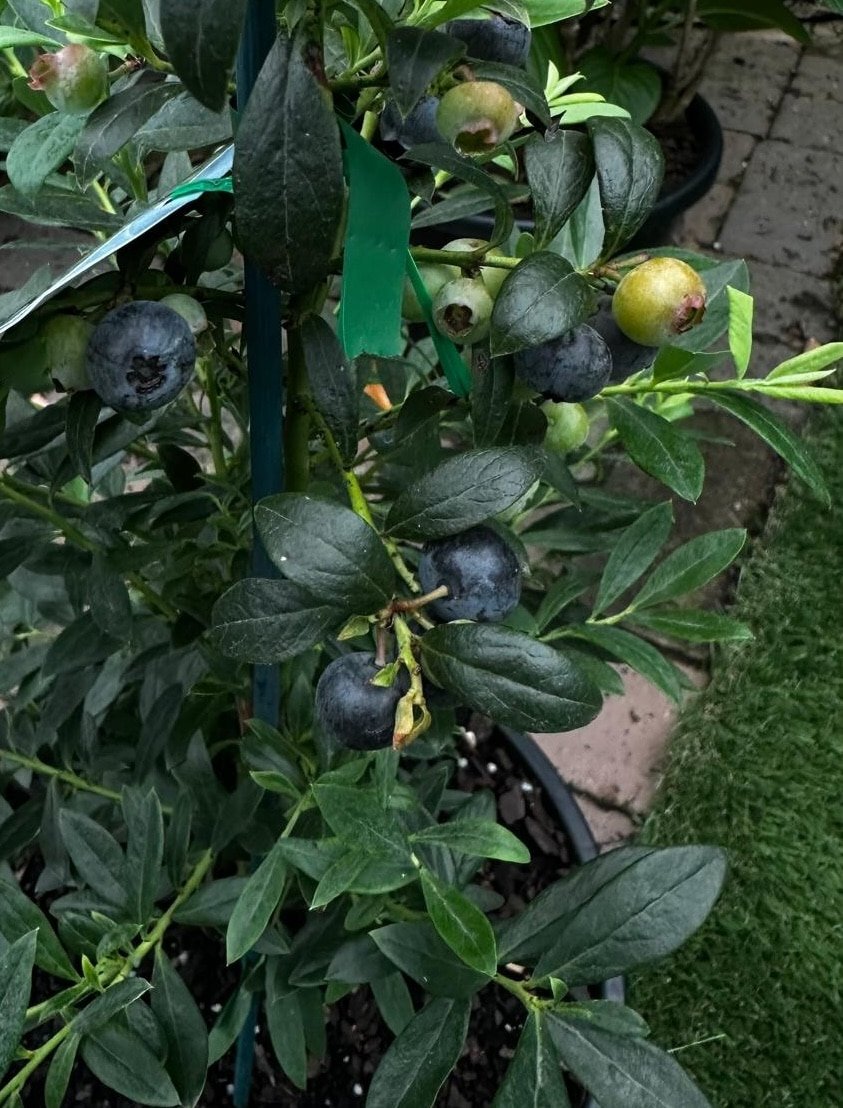
Highbush Blueberries are upright, multi-stemmed shrubs that offer ornamental value throughout the year. In spring, they are covered in clusters of delicate, bell-shaped white or pink flowers. These are followed by the iconic blue berries which ripen in summer. As the weather cools in many Australian regions, the green foliage turns into brilliant shades of orange, red, and burgundy before dropping in winter.
There are many cultivars specifically bred for Australian conditions, including “Southern Highbush” varieties which require fewer “chill hours” and are better suited to warmer climates like New South Wales and Queensland. Blueberries are unique because they require highly acidic soil to thrive. They have a shallow, fibrous root system, which makes them excellent candidates for container gardening. Growing your own blueberries ensures a fresh, chemical-free harvest that is far superior in flavour to store-bought options.
Care Tips
-
Position: Thrives in full sun. In very hot inland areas of Australia, some afternoon shade can help prevent the fruit and leaves from scorching during mid-summer.
-
Climate: Varies by cultivar. Ensure you select a variety suited to your local “chill hours” (the amount of time temperatures stay below 7 degrees Celsius in winter).
-
Soil: Requires very acidic soil with a pH between 4.5 and 5.5. If your garden soil is alkaline, it is best to grow them in pots using an azalea or camellia potting mix.
-
Watering: Blueberries have shallow roots and need consistent moisture, especially while the fruit is developing. They do not like to dry out, but the soil must also be free-draining to avoid root rot.
-
Fertilising: Use a fertiliser specifically formulated for acid-loving plants (like those for Azaleas). Avoid fertilisers containing nitrates or chlorides, and feed in early spring and again after harvesting.
-
Pruning: Young plants need little pruning other than removing damaged stems. Mature bushes should be pruned in winter to remove old, unproductive wood and encourage fresh, fruity growth.
-
Protection: You will likely need to use bird netting as the berries begin to ripen, otherwise, local wildlife will often harvest the crop before you can.