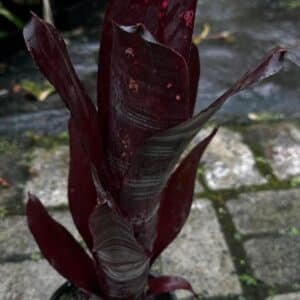
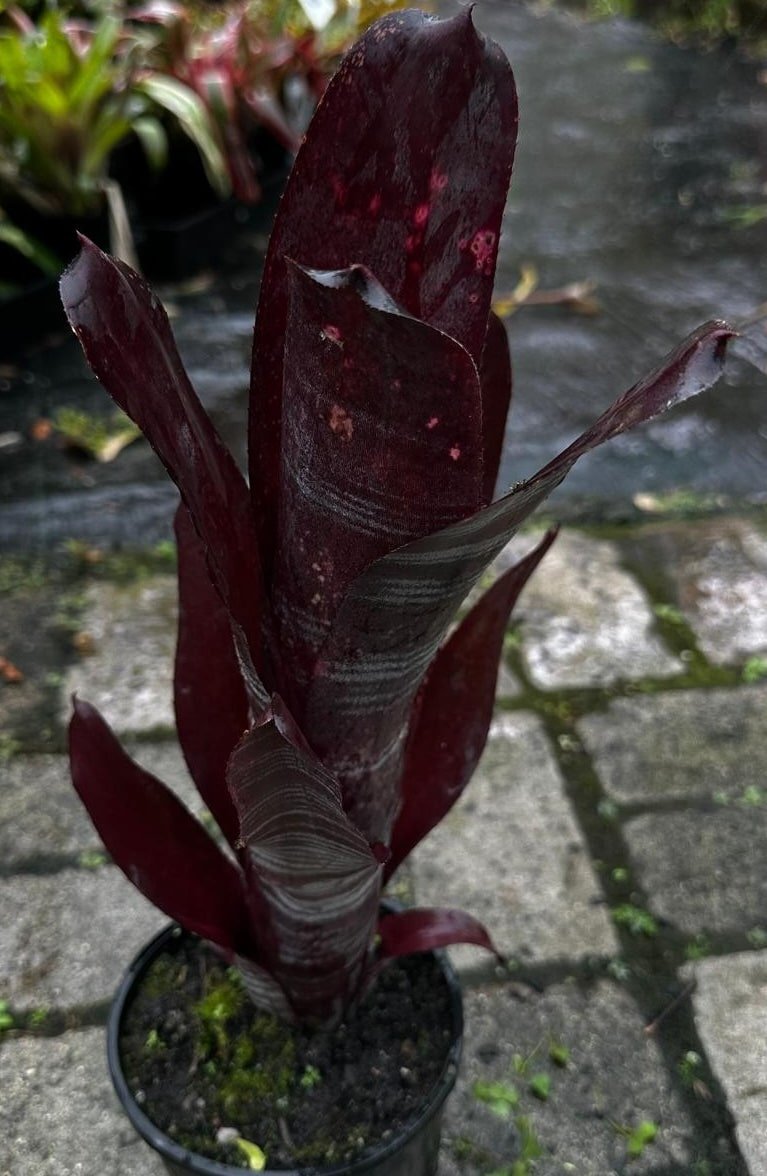
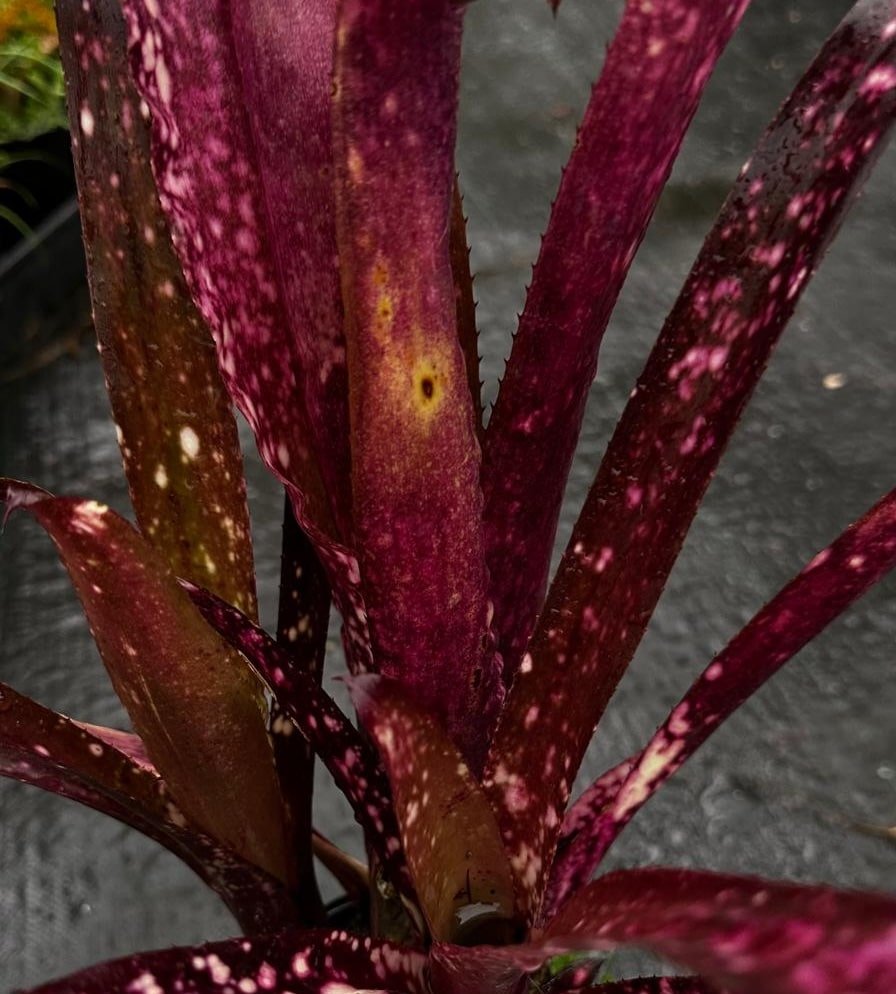
The ‘Red Form’ of Aechmea fasciata is a highly sought-after cultivar of the popular Silver Vase (or Urn Plant). While the standard species is known for its grey-green leaves, this variety boasts striking wine-red to burgundy foliage. The leaves retain the iconic silvery-white horizontal bands (trichomes) of the parent species, creating a dramatic high-contrast look that is particularly effective in modern interiors.
Like the standard variety, the ‘Red Form’ is an epiphyte, meaning in the wild it grows on trees and absorbs moisture and nutrients through its leaves and central “urn.” It produces a spectacular, large, pyramidal flower spike composed of stiff pink bracts and tiny blue flowers that emerge from between them. This flower head is exceptionally long-lasting, often remaining vibrant for several months. After flowering, the mother plant will slowly die, but will produce “pups” (offsets) around its base to continue the cycle.
Care Tips
-
Position: Prefers bright, indirect light. The red colouration of the foliage is most intense when the plant receives plenty of light; however, avoid harsh afternoon sun which can scorch the leaves.
-
Climate: Thrives in Tropical and Subtropical conditions. It is an excellent houseplant for Temperate regions but must be kept warm—ideally above $12^\circ\text{C}$.
-
Watering: This plant features a central “tank” or vase formed by its leaves. Keep this central cup filled with fresh water (ideally rainwater or filtered water). Every few weeks, flush the cup out to prevent the water from stagnating. The soil should be kept barely moist.
-
Soil: Use a very free-draining medium, such as an orchid bark mix or a specific bromeliad potting mix. Standard potting soil is often too heavy and can cause root rot.
-
Fertilising: Apply a half-strength liquid fertiliser or a specific bromeliad foliar spray once a month during the warmer growing months. Avoid getting high concentrations of fertiliser in the central cup.
-
Humidity: Being a tropical native, it loves humidity. Mist the foliage regularly, especially if your home has air conditioning or heating which dries out the air.
-
Propagation: When the “pups” at the base reach about one-third the size of the mother plant, they can be carefully removed with a sharp knife and repotted into their own containers.