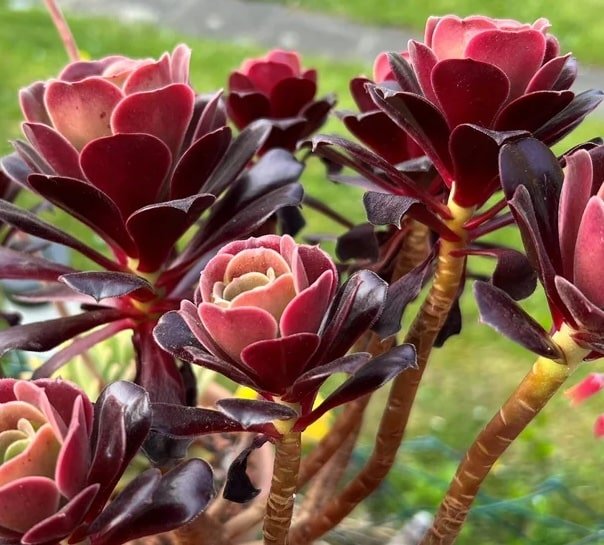
Aeonium arboreum ‘Atropurpureum’ is an architectural succulent that brings a bold, dark contrast to the garden. It features long, grey-brown stems that branch out to hold large rosettes of fleshy leaves. While the foliage may appear more bronze-green in shadier spots, it develops a deep, rich burgundy to dark purple hue when exposed to the sun.
This variety is particularly valued for its “tree-like” appearance, reaching heights of up to 1 metre. Like other Aeoniums, it is a winter grower, meaning it is most active when the weather is cooler. In late winter or early spring, mature plants produce impressive, cone-shaped clusters of bright yellow flowers, providing a stunning contrast against the dark foliage.
Care Tips
-
Position: Thrives in full sun to light shade. Full sun is essential to maintain the intense purple colouration of the leaves; in too much shade, the plant will revert to a greenish-bronze colour.
-
Climate: Prefers Mediterranean and temperate climates. It is sensitive to frost, so in cooler parts of Australia, it should be grown in containers that can be moved to a sheltered spot during winter.
-
Soil: Requires very well-drained soil. A specific succulent and cacti potting mix is ideal for container-grown plants to prevent root rot.
-
Watering: Water more regularly during the autumn and winter growing seasons, allowing the soil to dry out between sessions. Reduce watering significantly during the summer dormancy.
-
Fertilising: Apply a weak liquid fertiliser designed for succulents during the autumn or spring growth periods. Avoid over-feeding, as this can lead to soft, weak growth.
-
Pruning & Propagation: If the plant becomes too tall or leggy, the rosettes can be “beheaded” (cut off with a small amount of stem), allowed to callous for a few days, and then replanted. The remaining stem will typically produce multiple new rosettes.
-
Pests: Keep an eye out for mealybugs and aphids, which can occasionally hide in the tight centre of the rosettes.