
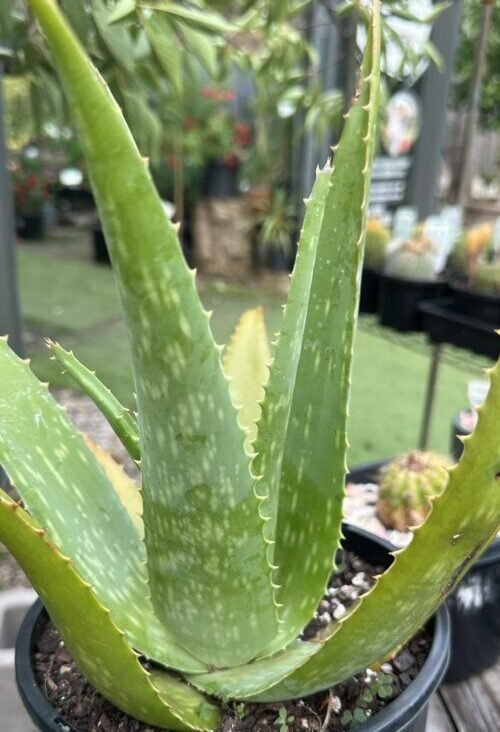
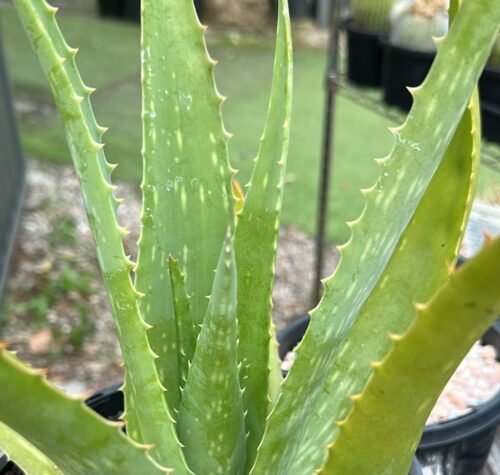
Aloe vera (often referred to as Aloe barbadensis) is perhaps the most well-known succulent in the world, prized for centuries for its medicinal and cosmetic properties. It grows in a stemless rosette of upright, lance-shaped leaves that are grey-green in colour and sometimes flecked with white spots when young. The edges of the leaves are lined with small, soft teeth, giving it a distinctive serrated appearance.
The interior of the leaves contains a clear, viscous gel that is widely used in Australia to treat minor burns and sunburns due to its cooling and healing effects. In maturity, the plant produces a tall flower spike (up to 90 centimetres) during summer, topped with pendulous yellow flowers that are attractive to nectar-feeding birds. It is an exceptionally hardy plant, making it a “must-have” for both beginner gardeners and those looking for a functional, “living first-aid kit” in their backyard.
Care Tips
-
Position: Thrives in full sun to part shade. While it loves the Australian sun, extremely hot afternoon rays can sometimes cause the leaves to turn a reddish-bronze hue.
-
Climate: Well-suited to most Australian climates. It is drought-tolerant and heat-hardy but must be protected from heavy frosts, which can turn the water-filled leaves to mush.
-
Soil: Requires excellent drainage. Use a dedicated cacti and succulent potting mix. It will not tolerate sitting in waterlogged soil.
-
Watering: Low water requirements. Follow the “soak and dry” method: water the plant deeply and then allow the soil to dry out completely before watering again. Reduce watering significantly during winter.
-
Fertilising: Apply a balanced liquid fertiliser at half-strength once or twice during the spring and summer growing season.
-
Pruning: Only necessary to remove old, shrivelled leaves at the base or to harvest mature leaves for their gel.
-
Maintenance: Aloe vera produces many offsets or “pups” at its base. These can be left to create a dense clump or removed and repotted to start new plants.


