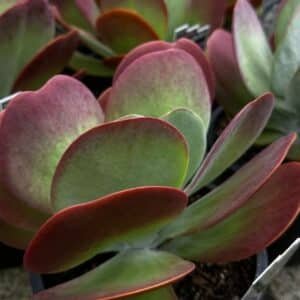
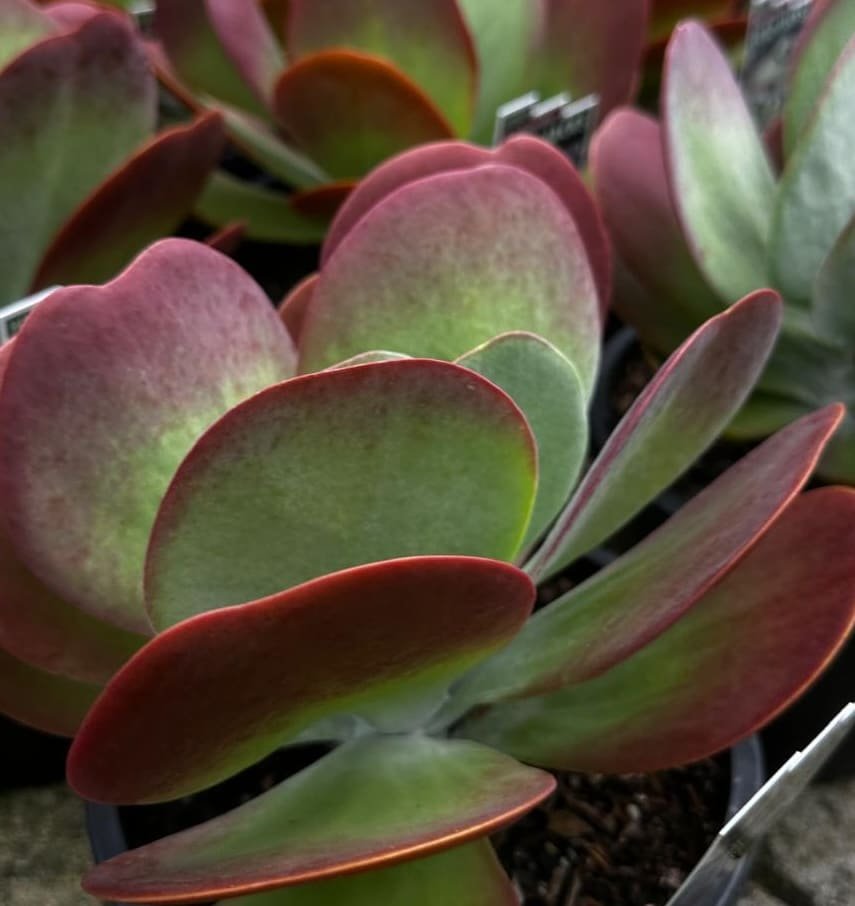
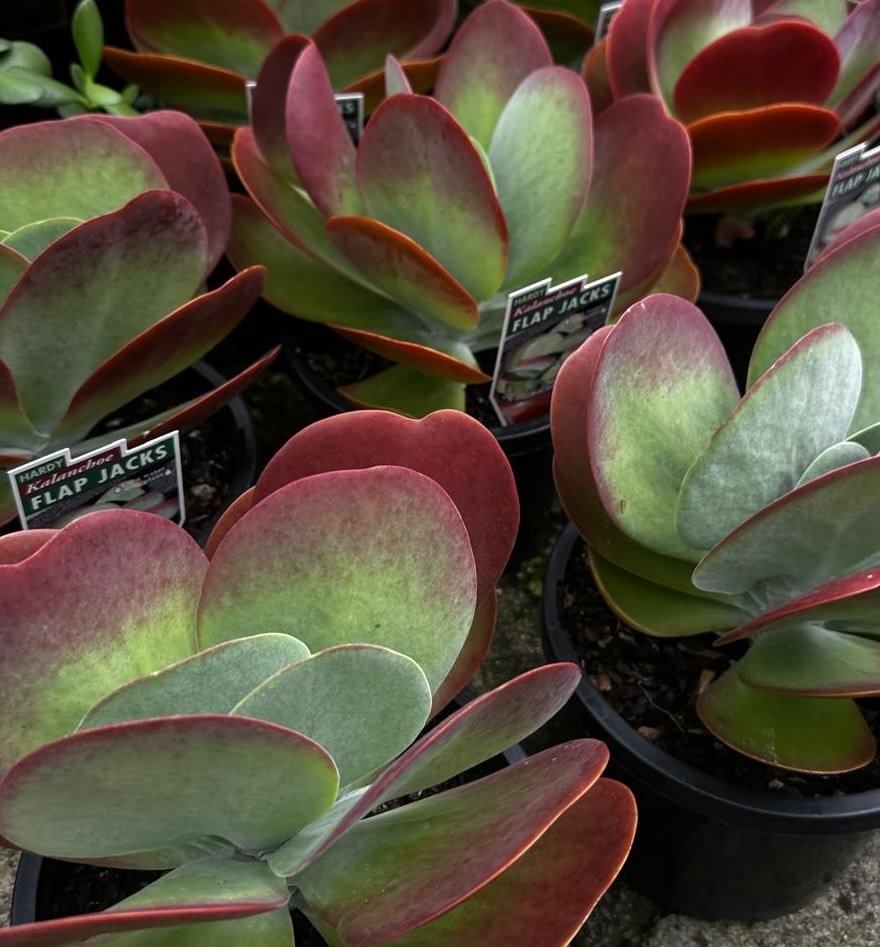
Kalanchoe luciae, frequently called Flapjacks or Paddle Plant, is one of the most visually striking succulents available to Australian gardeners. It is famous for its large, rounded leaves that grow in a basal rosette, resembling a stack of pancakes or flapjacks. The foliage is naturally a soft lime-green or grey-green, covered in a white, powdery coating called farina, which acts as a natural sunscreen.
The most spectacular feature of this plant is its dramatic colour change. When the plant is “stressed” by cold winter temperatures or high levels of sunlight, the edges of the leaves turn a brilliant, glowing crimson or deep burgundy. In late winter or spring, mature plants produce a tall, central flower spike reaching up to 1 metre, covered in small, pale yellow tubular flowers. It is important to note that this species is monocarpic, meaning the main rosette will die after flowering, but it usually produces several small “pups” or offsets at the base to carry on the plant.
Care Tips
-
Position: Best grown in full sun to achieve the most intense red colouration. It can grow in part shade, but the leaves will likely remain green and the plant may become leggy.
-
Climate: Thrives in warm, dry climates. It is quite hardy but should be protected from heavy frosts, which can damage the fleshy leaves. It handles the dry heat of Australian summers exceptionally well.
-
Soil: Requires excellent drainage. Use a high-quality cacti and succulent potting mix or garden soil amended with coarse sand or perlite.
-
Watering: Low water requirements. Use the soak and dry method: water deeply and then wait for the soil to dry out completely before watering again. Be careful not to overwater during the winter months.
-
Fertilising: Apply a half-strength liquid succulent fertiliser once or twice during the spring and summer growing season.
-
Pruning: Very little maintenance is required. Remove the spent flower stalk once it has finished blooming to encourage the growth of the offsets at the base.
-
Maintenance: Avoid touching the leaves excessively, as the white powdery farina can be rubbed off by oils from your skin, leaving permanent fingerprints on the foliage.