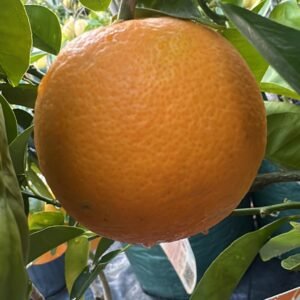
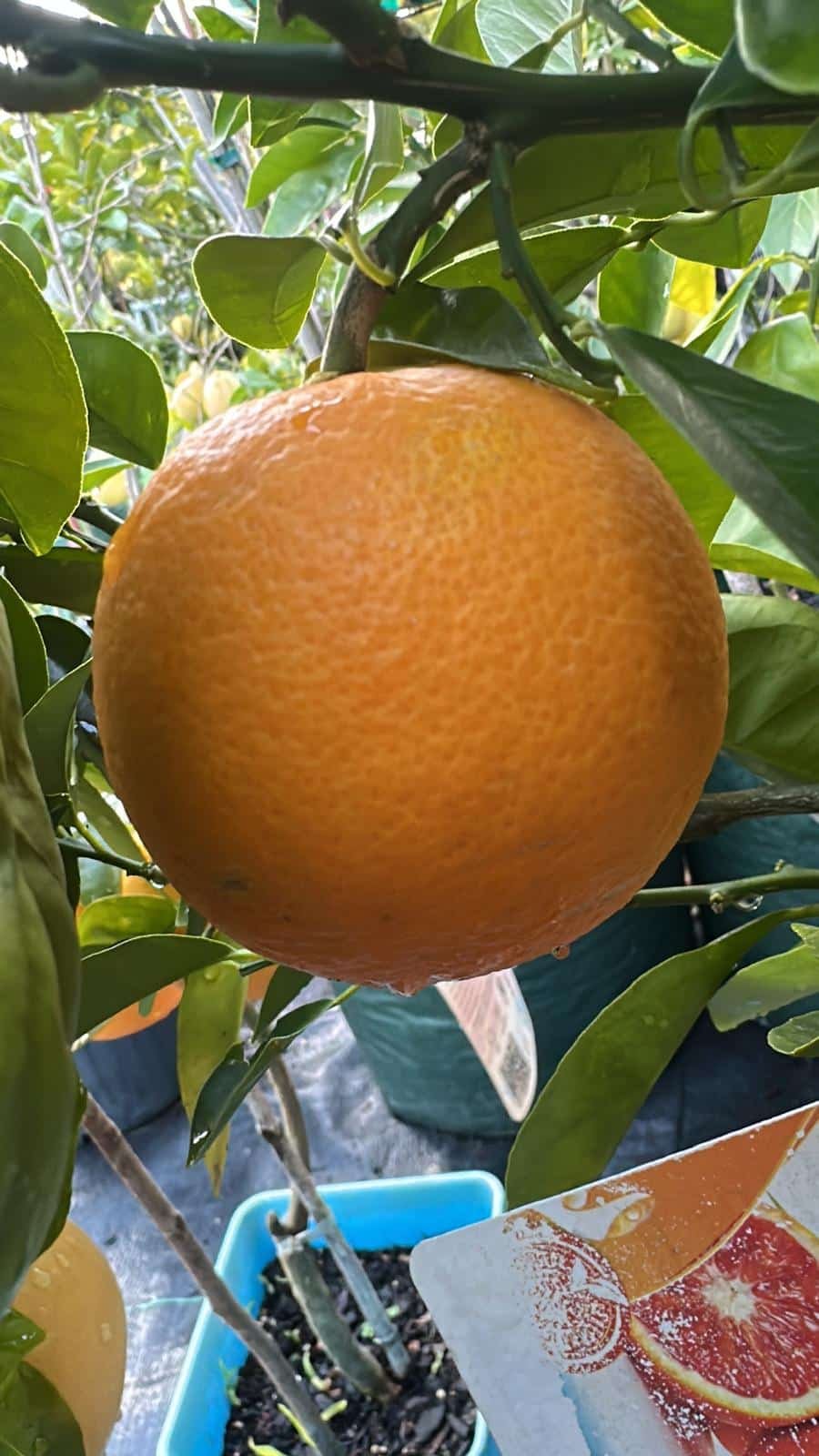


The Blood Orange (Citrus sinensis), is a unique variety of orange prized for the red pigmentation in its flesh and rind, caused by the presence of anthocyanins (the same pigments found in raspberries and red wine). The colour intensity varies depending on the cultivar and the growing conditions, with cooler night temperatures promoting deeper red colouration. Popular varieties include ‘Moro’ (the most common and deeply coloured), ‘Tarocco’ (known for its sweetness), and ‘Sanguinello’. The fruit is typically medium-sized with a smooth rind that may show a reddish blush. The flavour is its main appeal: a highly aromatic, slightly sweeter and less acidic taste than a common orange, often featuring notes of cherry, raspberry, or floral honey. The tree is a moderate-growing, evergreen citrus that is excellent for both eating fresh, juicing, and use in stunning culinary applications.
Care Tips
-
Position: Requires full sun (6–8 hours daily) for optimal growth, flavour, and the best development of the red colouration. It must be sheltered from strong winds.
-
Climate: Best suited to Warm Temperate and Subtropical climates. Blood oranges require a distinct drop in temperature between day and night during the ripening season (winter/early spring) for the anthocyanins (red colour) to develop fully. They are generally more tolerant of cold than other orange types.
-
Soil: Plant in deep, fertile, well-drained soil. Poor drainage is the most common cause of citrus failure, so ensure the soil is free-draining.
-
Watering: Water deeply and regularly, especially when the tree is young, and during the flowering and fruiting periods. Avoid overwatering, particularly in winter.
-
Fertilising: Citrus are heavy feeders. Apply a high-quality citrus fertiliser (high in nitrogen and potassium) three to four times a year: in early spring, mid-summer, and early autumn.
-
Pruning: Prune lightly after harvest to shape the tree, remove dead, diseased, or crossing branches, and encourage an open canopy for better air and light circulation. Remove any suckers growing below the graft union immediately.
-
Harvest: Fruit usually ripens in winter to early spring. The fruit holds well on the tree, becoming sweeter over time.