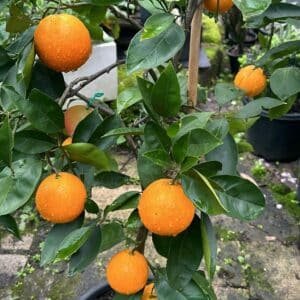
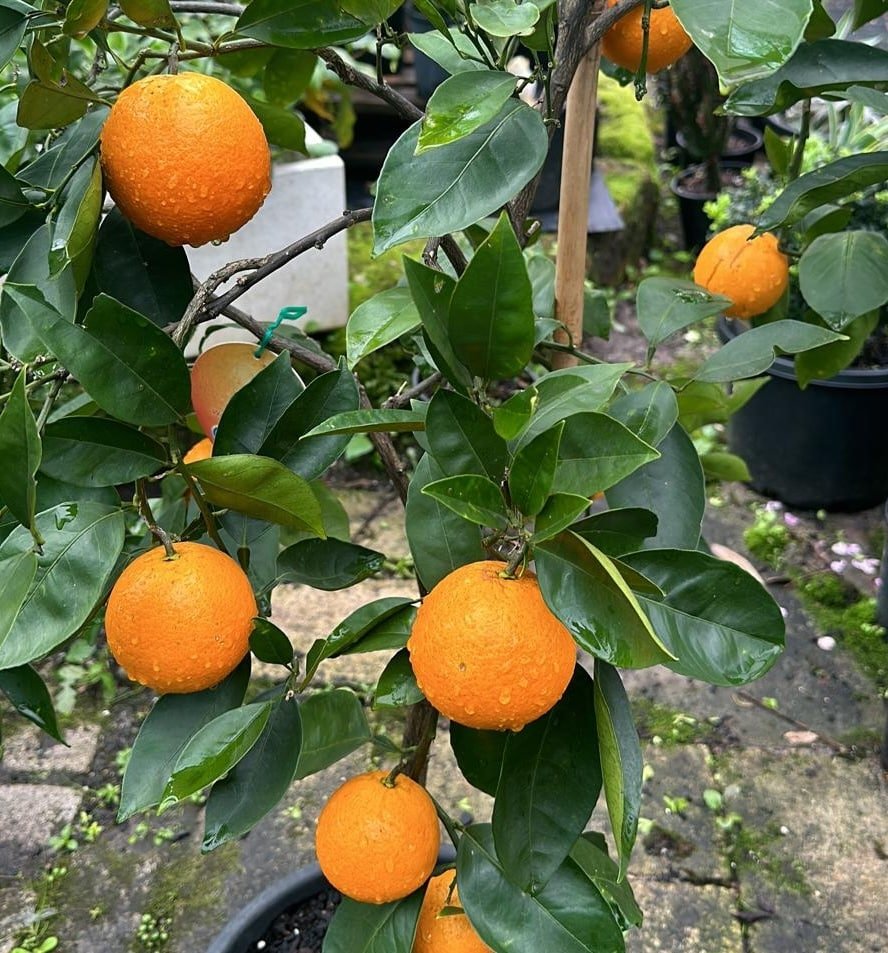
The ‘Washington Navel Dwarf’ is the compact version of arguably the world’s most famous eating orange. By grafting the classic Washington Navel onto a dwarfing rootstock, the tree stays at a manageable height of 1.5 to 2 metres, while still producing full-sized, high-quality fruit. This makes it a premier choice for large pots on sunny balconies or as a productive feature in small urban gardens.
The fruit is large, round, and easily identified by the small “navel” at the blossom end. It features a bright orange, pebbled rind that is easy to peel, and the flesh is deep orange, remarkably sweet, and completely seedless. Because the fruit is firm and not as prone to “dripping” as juicing varieties, it is widely considered the best orange for fresh snacks and lunchboxes. It typically ripens in mid-winter, providing a burst of Vitamin C when it’s needed most.
Care Tips
-
Position: Requires full sun (at least 6 hours daily). Good light is essential for the tree to produce the sugars that make the fruit sweet.
-
Climate: Best suited to Temperate and Subtropical climates. It is quite hardy once established but requires protection from heavy frosts, especially when grown in pots.
-
Soil: Needs rich, fertile, and excellently drained soil. In pots, use a premium potting mix designed specifically for citrus and fruit trees.
-
Watering: Water regularly and deeply. Potted dwarf trees dry out faster than those in the ground, so check the soil moisture frequently during summer. Do not let the tree sit in water.
-
Fertilising: A heavy feeder. Apply a specific citrus fertiliser in early spring, mid-summer, and early autumn. For potted trees, consider using a liquid seaweed or fish emulsion supplement every few weeks during the growing season.
-
Pruning: Very little pruning is required due to its slow-growing nature. Simply remove any dead wood or branches that cross over each other. Always remove “suckers” (vigorous shoots) that grow from below the graft union.
-
Harvest: Harvest in mid-winter (June to August in the Southern Hemisphere). The fruit tastes best when left on the tree until it is fully orange and slightly soft to a firm squeeze.