
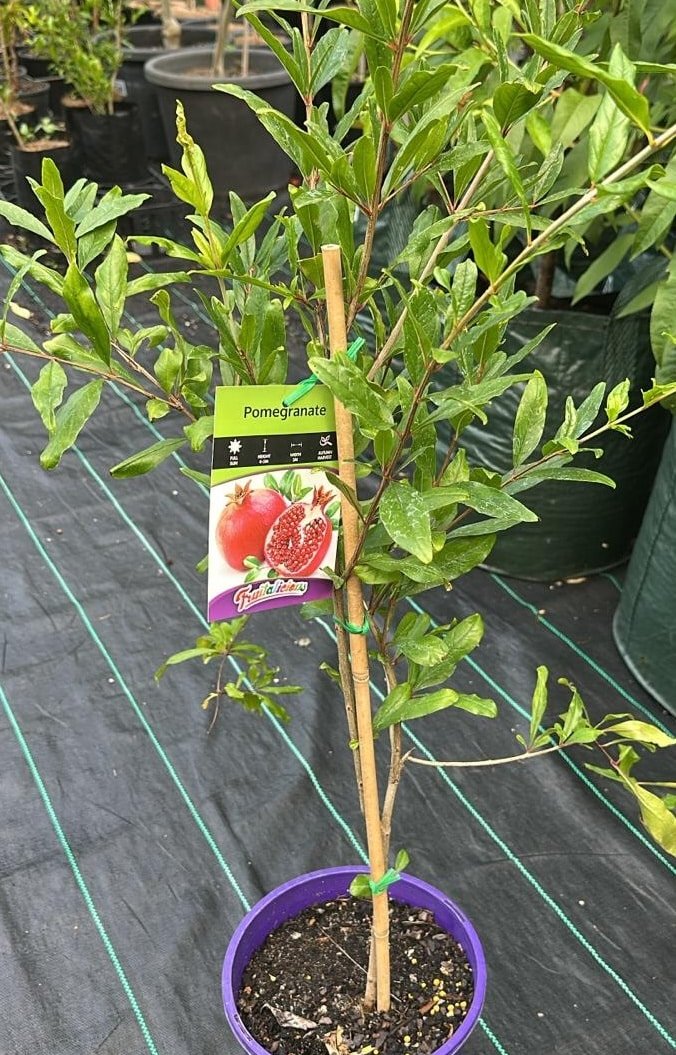
The ‘Wonderful’ pomegranate is the global benchmark for pomegranate quality and is the most widely planted commercial variety in the world. In Australia, it is highly prized both for its prolific fruit production and its ornamental value. It grows as a vigorous, multi-stemmed deciduous shrub or can be trained into a small, attractive tree reaching approximately 3 to 4 metres in height.
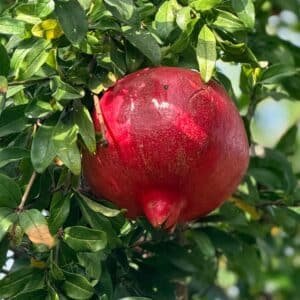
The fruit is notably large with a thick, leathery, glossy red skin. Inside, it is packed with tightly clustered arils (the fleshy seed casings) that are a brilliant deep crimson. These arils are exceptionally juicy with a perfect sweet-tart balance, and the seeds themselves are smaller and softer than many older varieties, making them much easier to eat fresh. The tree is also stunning in late spring and summer when it is covered in vibrant, orange-red, crepe-like flowers.
Care Tips
-
Position: Requires full sun (at least 6–8 hours daily) to ensure the fruit ripens fully and develops high sugar levels. It is an excellent choice for a hot, sunny spot in the garden.
-
Climate: Extremely adaptable, performing well in Temperate, Subtropical, and semi-arid climates. It is drought-tolerant once established and can handle frost during its winter dormancy.
-
Soil: Prefers well-drained, loamy soil but is quite forgiving of various soil types, including alkaline soils. However, it must have good drainage, as it does not tolerate waterlogged roots.
-
Watering: While drought-hardy, regular watering is essential during fruit development (summer and autumn) to ensure juicy arils and to help prevent fruit splitting, which often occurs with erratic watering or sudden heavy rain.
-
Fertilising: Apply a balanced fertiliser or well-rotted manure in early spring and again in early autumn. Avoid excessive nitrogen, which can promote leaf growth at the expense of fruit.
-
Pruning: Best pruned in winter while dormant. Remove suckers from the base to maintain a tree-like shape and thin out the centre to improve light penetration and airflow.
-
Harvest: Fruit is typically ready from late March to May in Australia. Harvest when the fruit has reached its full red colour and sounds metallic when tapped. Use secateurs to clip the fruit from the branch rather than pulling it.