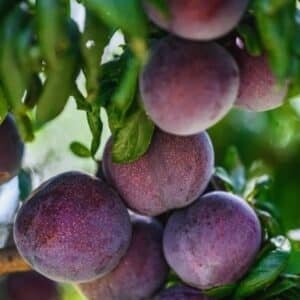
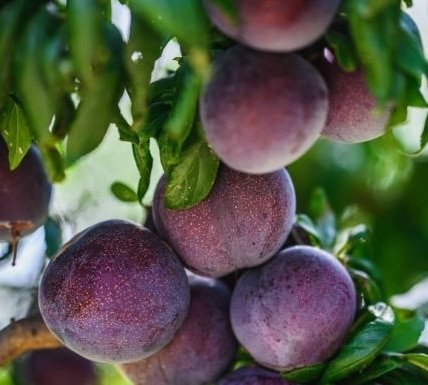
The ‘Primetime’ plum is a standout variety celebrated for its superior eating qualities and robust performance in the home orchard. Discovered as a seedling of ‘Showtime’, it is a Japanese-style plum that produces medium to large, heart-shaped fruit. The skin is a vibrant red to dark blue-purple when fully mature, distinguished by prominent lenticels (small pale dots) on the surface.
What sets ‘Primetime’ apart is its unique flesh. Initially yellow, the flesh features attractive pinkish-red colouration diffused throughout, which intensifies and becomes more predominantly red as the fruit reaches peak maturity. The texture is notably firm and meaty rather than soft, with a moderate amount of juice, making it an excellent choice for those who prefer a more substantial bite. The flavour is rich, sweet, and highly regarded by home growers.
Care Tips
-
Position: Plant in full sun to ensure maximum sugar development and to help the skin reach its characteristic dark colouration.
-
Climate: Well-suited to temperate Australian climates. It is a deciduous tree that requires a moderate amount of winter chill (approx. 700–800 hours) to fruit successfully.
-
Pollination: To ensure a heavy crop, it is best planted with a compatible Japanese plum pollinator. ‘Santa Rosa’ is highly recommended as a partner.
-
Soil: Prefers well-drained, fertile soil. Like most plums, it benefits from the addition of organic matter or compost at the time of planting.
-
Watering: Maintain consistent moisture during the fruit-forming months of spring and summer. Mulching around the base of the tree is highly recommended to protect the root system from the summer heat.
-
Fertilising: Apply a balanced fertiliser in early spring as the buds begin to burst, and consider a follow-up application in summer after the harvest to support next year’s bud development.
-
Pruning: Typically pruned into an open vase shape during the dormant winter months to allow sunlight into the centre of the canopy.
-
Harvest: Generally harvested in early to mid-January in most Australian regions. The firm flesh allows the fruit to be handled and stored slightly better than softer “blood plum” varieties.