
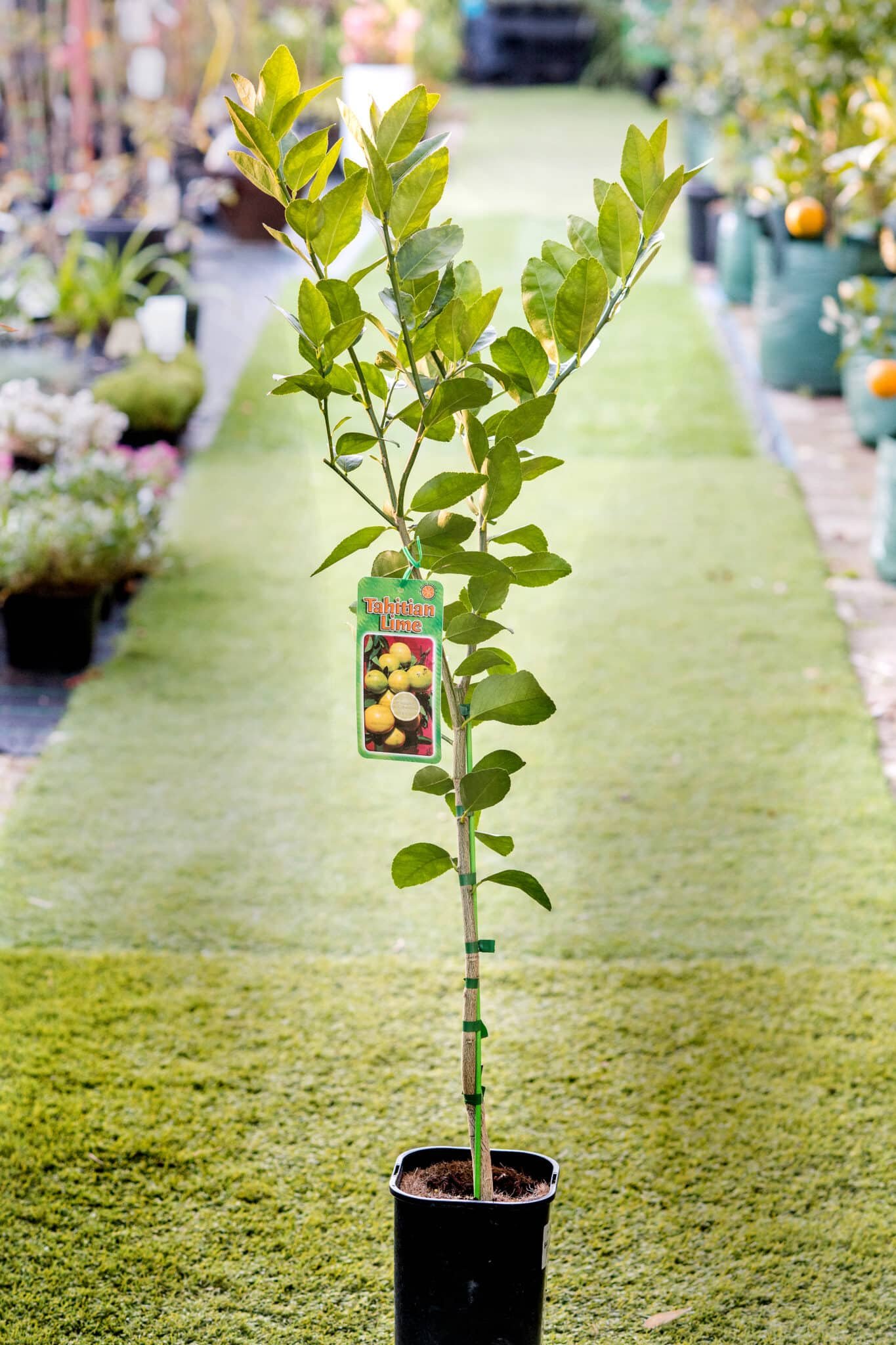
Citrus latifolia ‘Tahitian’, often simply called the Tahitian Lime, is the most common variety of seedless lime grown in Australia and globally. It forms a vigorous, medium-sized, thornless evergreen tree, making it easy to manage in the home garden. The fruit is medium to large, oval-shaped, and usually seedless. It starts off green and remains green when ripe, only turning yellow if left on the tree for an extended period. The fruit is exceptionally juicy, highly acidic, and has a strong, distinctive lime aroma and flavour, making it indispensable for cocktails, marinades, desserts, and preserving. Tahitian Limes are highly productive, often bearing two main crops per year, peaking in late autumn and spring.
Care Tips
-
Position: Requires a position in full sun (at least 6 hours of direct sun daily) for the best fruit set and quality. It should be sheltered from cold winds.
-
Climate: Best suited to Warm Temperate, Subtropical, and Tropical climates. Limes are more sensitive to cold than lemons; protect young trees from heavy frosts.
-
Soil: Plant in deep, fertile, well-drained soil. Good drainage is crucial to prevent root rot.
-
Watering: Water regularly and deeply, especially when flowering and fruiting. Consistent watering prevents the fruit from drying out or dropping prematurely.
-
Fertilising: Citrus are heavy feeders. Use a slow-release fertiliser specifically formulated for citrus (high in nitrogen and potassium) in early spring, mid-summer, and early autumn.
-
Pruning: Prune lightly to shape the tree and maintain an open structure, allowing light to reach the centre. Remove any dead or diseased wood.
-
Harvest: Pick the fruit when it is a full, deep green and firm to the touch for maximum acidity.


